

Over the centuries, The Banyan tree has taken on significance as a symbol of fertility, life and resurrection. It is a fitting symbol for ‘DesiStoriesAshaUSA’ which presents the stories of South Asians who have wandered far and wide from their ancestral homes, traversing new frontiers and setting down roots and networks in the US. Our goal is to connect and establish closer ties within the diasporas of the South Asian community and facilitate a dialogue with our readers. We will showcase stories of achievement and success and also resiliency and hope.
Our story today features Aamera Siddiqui, a pursuit for social justice the driving force in her life.
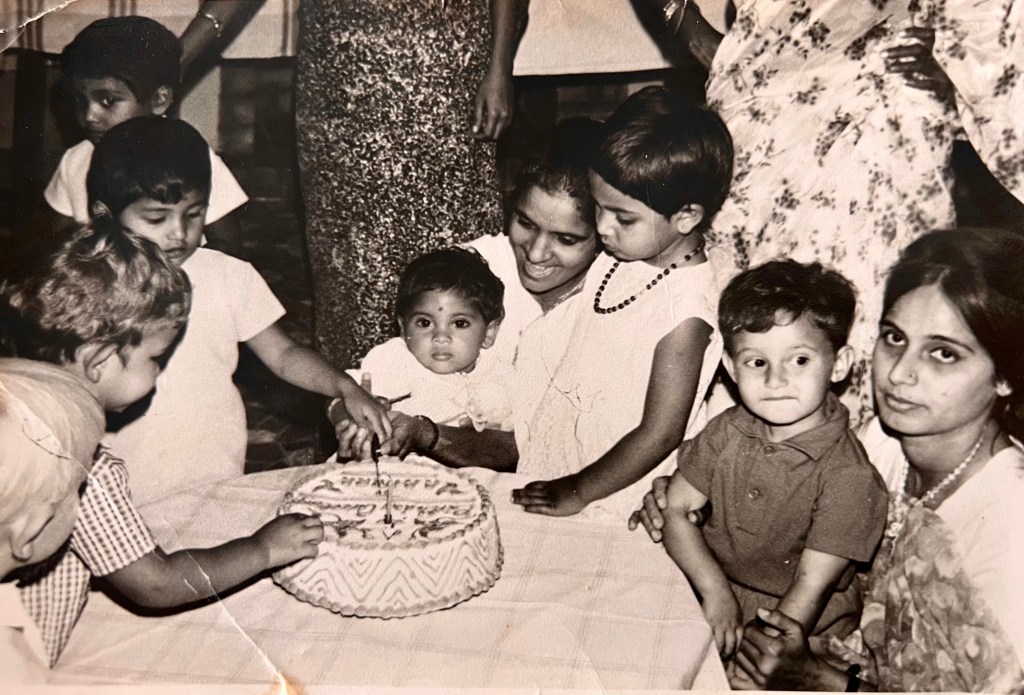
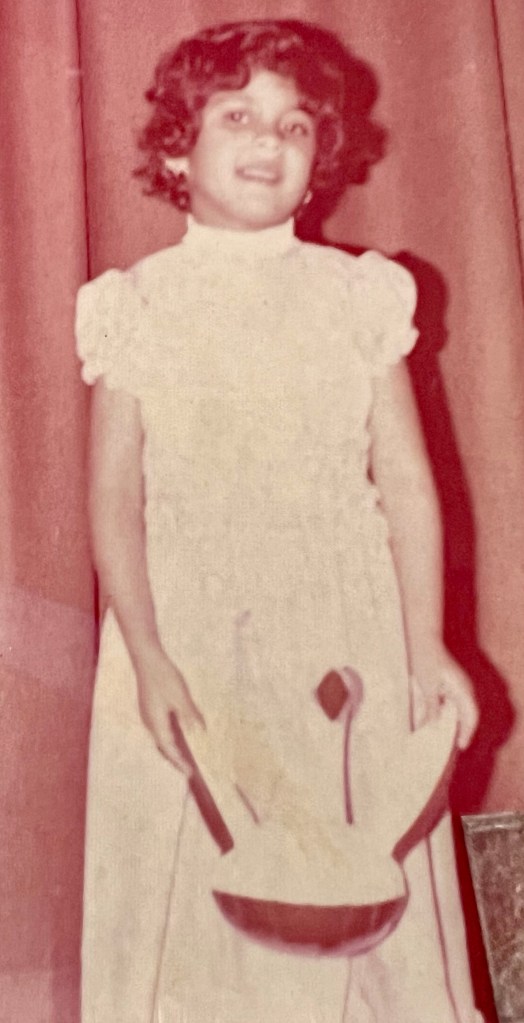
By the time Aamera was 13, she had lived in five countries on three continents. She was born in Dar es Salaam, Tanzania and her experiences as a global nomad, growing up amongst multiple cultures, political crises, religions and races led her down the natural path of pursuing anti-racism and equity, and where she is today, a social Justice ‘Theater-Maker’.
A peripatetic Childhood
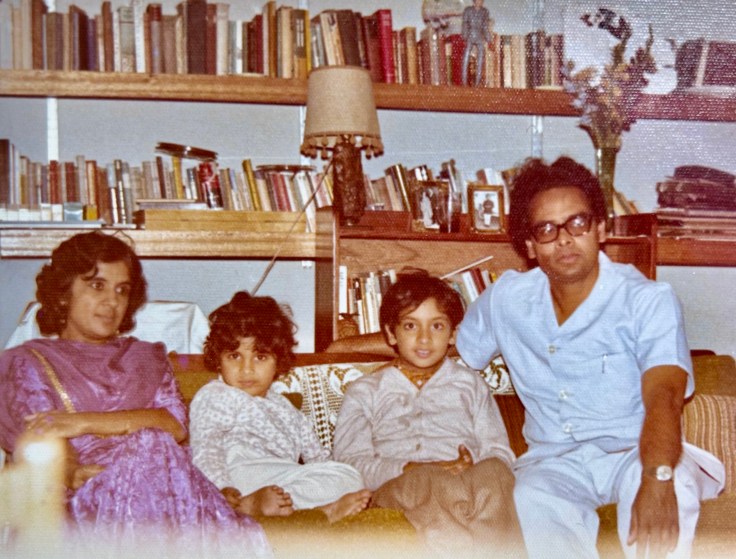
Aamera’s parents were from Amroha, Uttar Pradesh, a city known for its culture, poets and writers. They moved to Tanzania in 1963, where Aamera was born in 1968. Career opportunities caused the family to subsequently move to Zambia, where her father was the Dean of the English Department at the college in Lusaka. With the huge Indian community in Zambia, life was happy and wonderful, till spillover political upheaval from Uganda resulted in their having to move back to India temporarily.
Her father eventually enrolled in the PhD program at Syracuse university, and the family, sad to leave India, found themselves in the US, a difficult adjustment after the comfort and warmth of life in Africa and India. Life’s unpleasant reality check included student housing, racism and lack of diversity. At only 71/2 years, Aamera found she was the only Indian student, after schooling that had included British, Zambian, Indian and South African students and teachers. Her home life reflected the stress and tension of adjusting to a new culture, and displaced and disoriented, she found herself asking “where do I belong?” A ray of light or ‘raunak’ as Aamera calls it, was brought into the home when her mother started an in-home day care service for the children of other international families. It felt more global and what Aamera was used to.
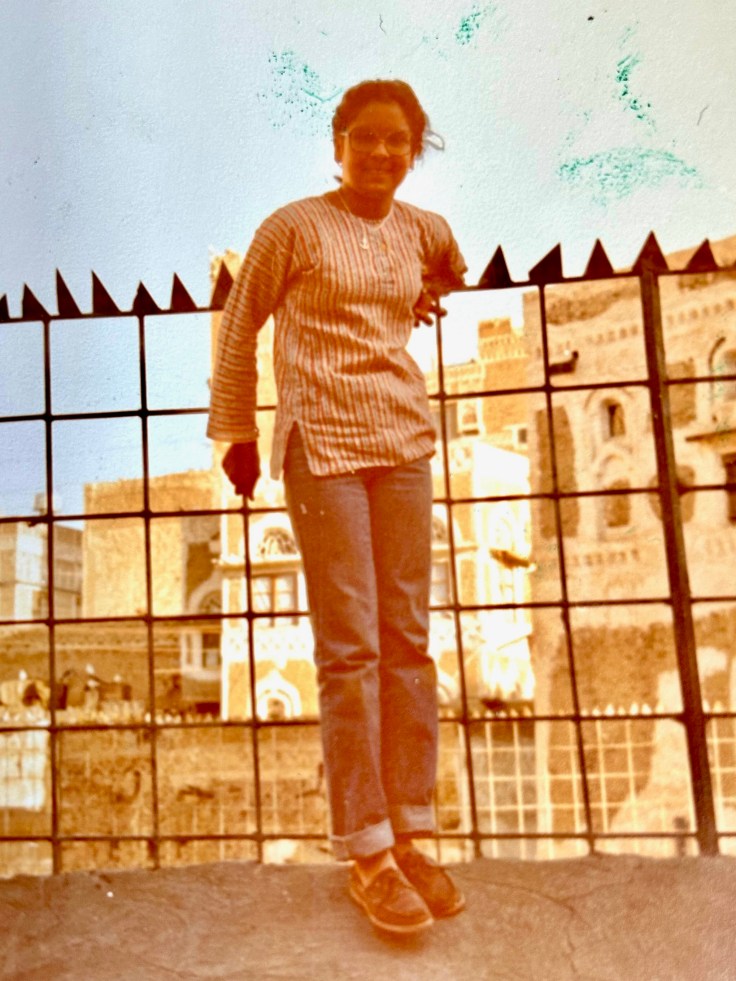
Her father’s next job on a two year contract with USAID (United States Agency for International Development), moved the family to Yemen. Aamera felt right at home in the International School in Sana’a with students from 175 countries. With her family, she also traveled around the Middle East and South Asia.

Rising Social Consciousness
After Yemen, the family came back to Syracuse, where Aamera spent her HS years. As an immigrant in the US, Aamera found herself assimilating, shedding aspects of her identity and silencing her true self to navigate invisible and negative narratives that sought to define her through the lenses of anti-immigrant rhetoric, policies and Islamophobia. The discomfort zone was her own home, her in-home culture being very different from her out of home culture.
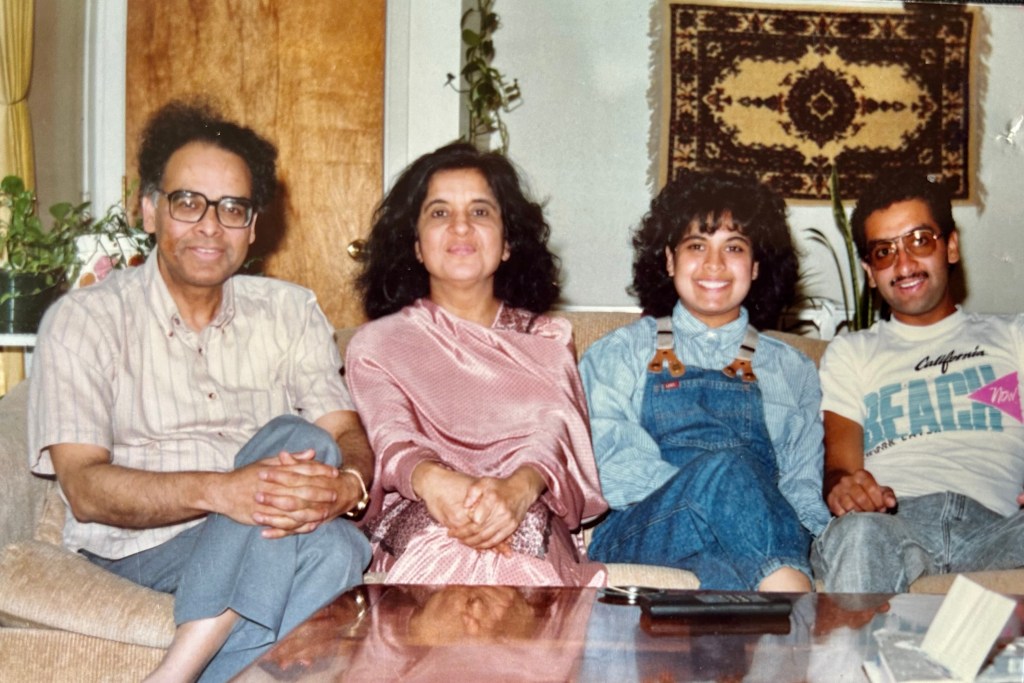
In High School, Aamera’s friends were all involved in theater but Aamera found that she could not relate to the plays being produced such as ‘Showboat’ and ‘Into the Woods’. They were not her stories or reflective of her experiences. This changed when she took a course in African American literature and felt right at home.
Though she was on a pre-Med track and got her Masters of Health Administration from Penn State, she knew the medical field was not for her after an internship in that arena. She got involved in International Associations, public speaking on subjects pertinent to International students, and writing essays on issues close to her heart.
Her own experiences and involvement drew her to wanting to change the situation for others who were also experiencing exclusion, under-representation and oppression in a white dominant system. She strongly believed that everyone has the right to experience their life from a place of belonging.
This led her eventually to jobs as a MultiCultural Education Coordinator at Rochester community college in 1991, and Diversity Director at the private Blake School in Minneapolis, where she developed programming designed to support under represented students and families, advanced strategic diversity plans and educational programs to raise awareness around equity, inclusion and more. She also worked with low income and first generation students in programs such as Upward Bound, and provided support services to students hoping to obtain a college degree.
in 2004, she became a qualified administrator for the Intercultural Development Inventory, an online survey to assess inter-cultural competence and provide profile results at both an individual and organizational level. This launched her career as an anti-racism and equity consultant while simultaneously pursuing theater on a parallel track.
Theater
Aamera first discovered her love of theater and acting in High School, having inherited her cultural genes from her mother’s side of the family, that included poets, TV producers and actors.
After moving to the Twin Cities in 1996, Aamera spent almost a decade trying to find a place in the thriving theater scene. In all that time, she found no plays that reflected her or her experiences. Like many artists of color, the message was “theater is not for people like you”. She continued to support herself as an anti-racism and equity consultant, but eventually co-founded her own theater company ‘Exposed Brick Theater (EBT)’, with her partner Suzy Messerole.
She knew nothing about starting a theater, only that the established convention and canon excluded many voices, artists and aesthetics. EBT is a marriage of Aamera’s two passions: theater and social justice, and is dedicated to telling untold stories, centering omitted narratives and creating art at the intersection of identities.
Exposed Brick Theater’s philosophy of follow the story and playwright has resulted in their 17th premiere in 19 years.They are funded by grants from the National McKnight foundation, Metropolitan Arts Council, MN State Arts Board and co-productions with other theaters such as the Pillsbury theater.
(For more information on the EBT, please visit their website at: https://exposedbricktheatre.com)
“I believe in the magic of theater. It has the potential to create empathy and understanding across divisions by allowing audiences to experience life through someone else’s perspective – even perspectives we may disagree with. Theater also has the power to dismantle stereotypes by replacing them with narratives that challenge limited knowledge of a particular culture or community. For this reason, I am focused on holding theater spaces where underrepresented artists and communities feel at home and can create plays and performances that authentically reflect their narratives and experiences”.
Aamera as Writer, Producer, Director, Actor
A sampling of plays that Aamera has either written, produced, directed or acted in:
The Trouble With Bill
A short 12 minute musical about the Civil Rights Infringements resulting from the Patriot Act. In this play, Aamera played the role of a librarian who is desperately trying to document and preserve ‘The Bill of Rights’, before the US Government eliminates them in the name of Freedom.
American as Curry Pie
Aamera’s autobiographical one woman show that premiered at the History Theater in Saint Paul in 2011. In this play, Aamera explored the challenges, humor and irony of straddling two different cultures: her home culture and those outside the four walls of her play. Aamera played 23 different characters from her life, including neighbors, teachers, aunties and her family. Themes of immigration, islamophobia, near deportation and struggling to fit into a culture that was not the one her parents left behind in India in 1963, emerge throughout Aamera’s story. Aamera has performed this play for anti-racism conferences, diversity events, schools, universities, interfaith conferences and more…
One of the favorite comments, Aamera received was from a South Asian teen who saw ‘American as Curry Pie’, and asked, “Did you have a hidden camera in my house? Because the parents in the play said exactly the same things as my parents!”
A review of ‘American as Curry Pie’: https://www.twincities.com/2011/03/20/theater-review-curry-pie-offers-generous-portions-of-American-culture/
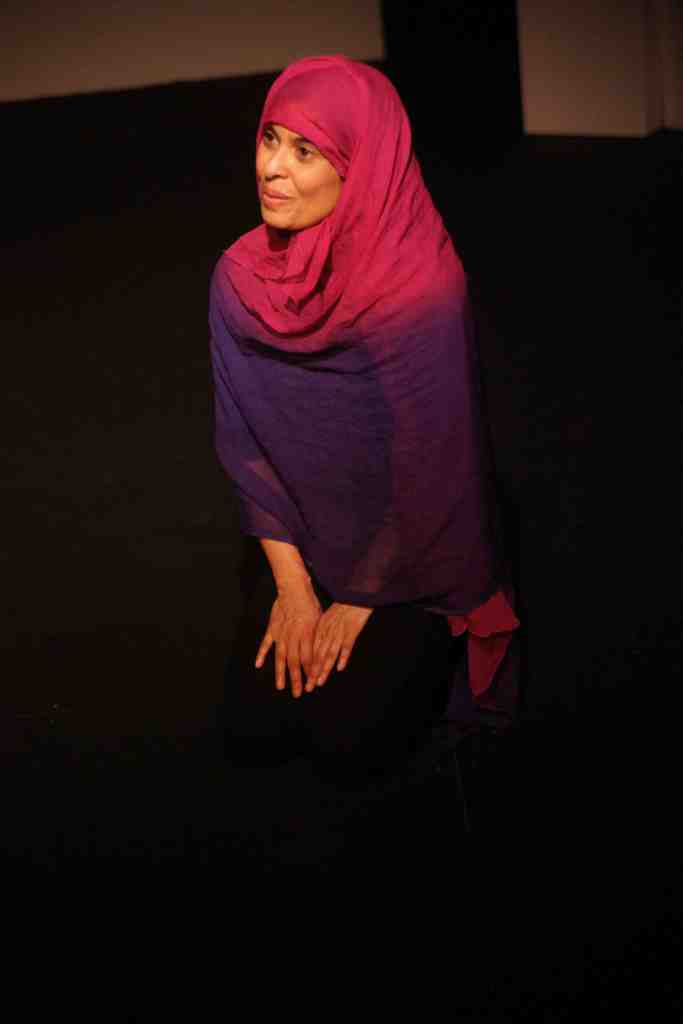
Freedom Daze
Ideas like the “Muslim ban” didn’t appear overnight. Its seeds were planted long before the 45th President or 9/11. Freedom Daze is a journey through the media maze of (mis)information and indoctrination that has led to the creation of an enemy class of “them.” Using a multi-media approach and weaving together multiple storylines, the play follows an artist’s quest to discover how a childhood acquaintance, “The Girl in the Yellow Dress” came to be sentenced to a life in solitary confinement. In a world of “They hate freedom”, “If you see something, say something” and “The Terror Alert is”…where can one find the truth?


Cloth
How much is too much? How little is too little? And who gets to decide?
From the burka ban in France to dress codes in our own communities, when it comes to women’s clothing it seems like everyone has an opinion. CLOTH is a work that explores women’s relationship to cloth, covering and choice, and the avalanche of factors influencing that choice.
A review of Cloth: https://www.talkinbroadway.com/page/regional/minn/minn681.html
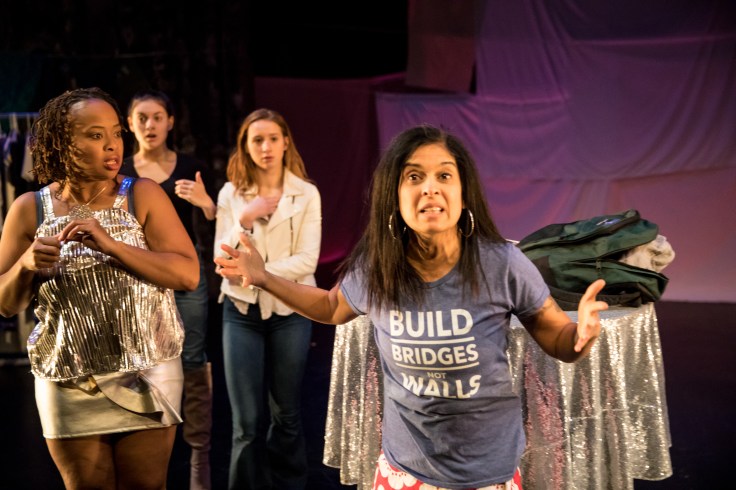
Draw Two Circles
A performance art piece that Aamera co-created in 2005, with her theater partner Suzy Messerole, exploring how two women from very different backgrounds, Suzy raised Catholic in a small town in Iowa and Aamera a global citizen raised in Islam, find connection across their differences, through their exploration of patriarchy in society and their religions.
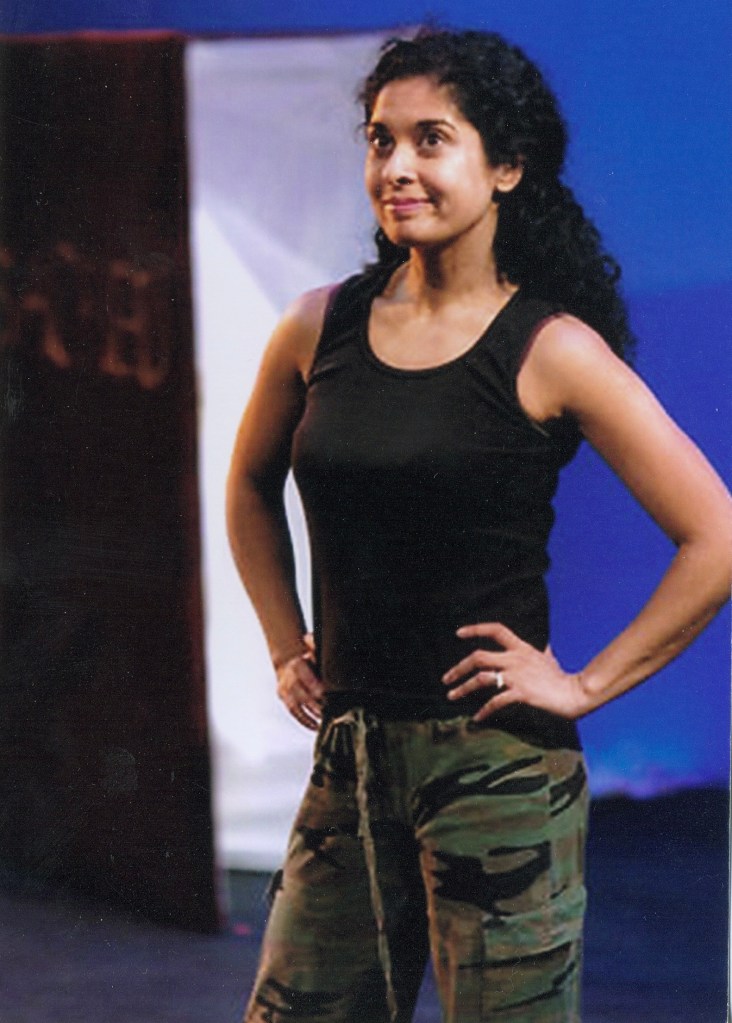
Coming in Fall 2024: Log Kya Kahenge
The Khan family is the perfect Desi family with the perfect eldest daughter (let’s not talk about the younger one). But beneath the veneer of perfection lies a secret they don’t want to confront. ‘Log Kya ‘Kahenge’ explores mental health stigma, a health care system that isn’t culturally responsive and what happens when “What will people say?” becomes the gauge by which you live your life. This play explores themes of societal pressures, mental health and the importance of cultural responsiveness in the mental health system.
Family
For all her work in raising social consciousness, Aamera’s primary passion is her family.
She met her husband Kevin, a rock and roll bass guitarist and a music performance venue manager, when he saw her performing on stage in March 2001 at the MN Opera Center. The show was based on Women’s history, and was a staged version of “The House on Mango Street’, short stories written by Sandra Cisneros. He was visiting family from his home in Chicago and came backstage to meet her. After reconnecting later that year and a two year courtship, they eloped to Maui and got married in 2003. Her parents, staunch Muslims, initially resistant, accepted Kevin eventually and they had a good relationship till her father passed away in 2006 and her mother in 2023.
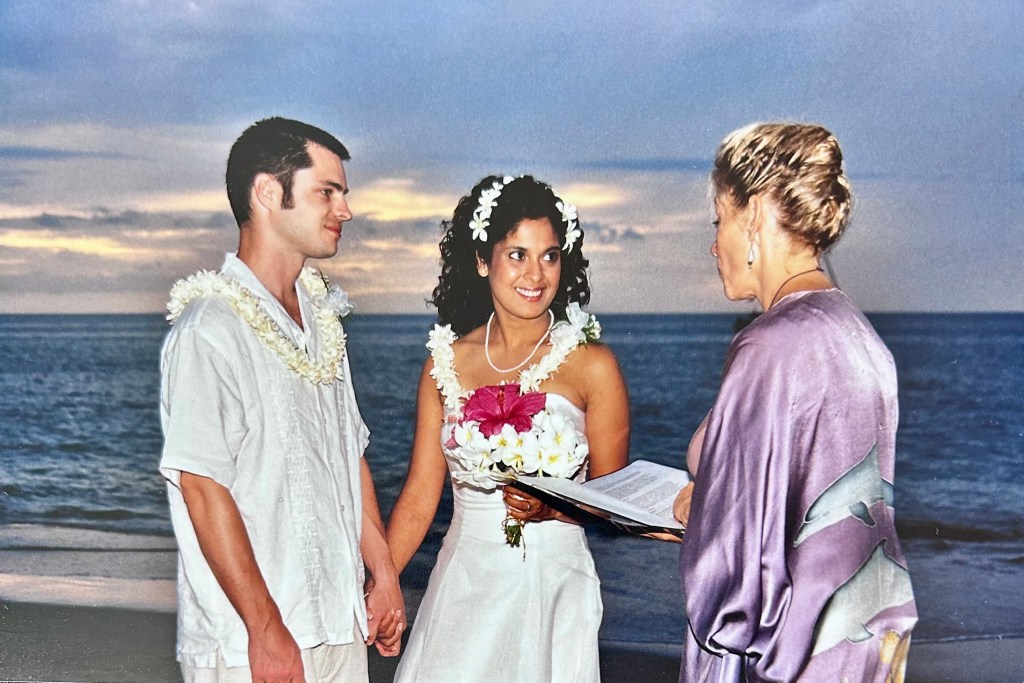
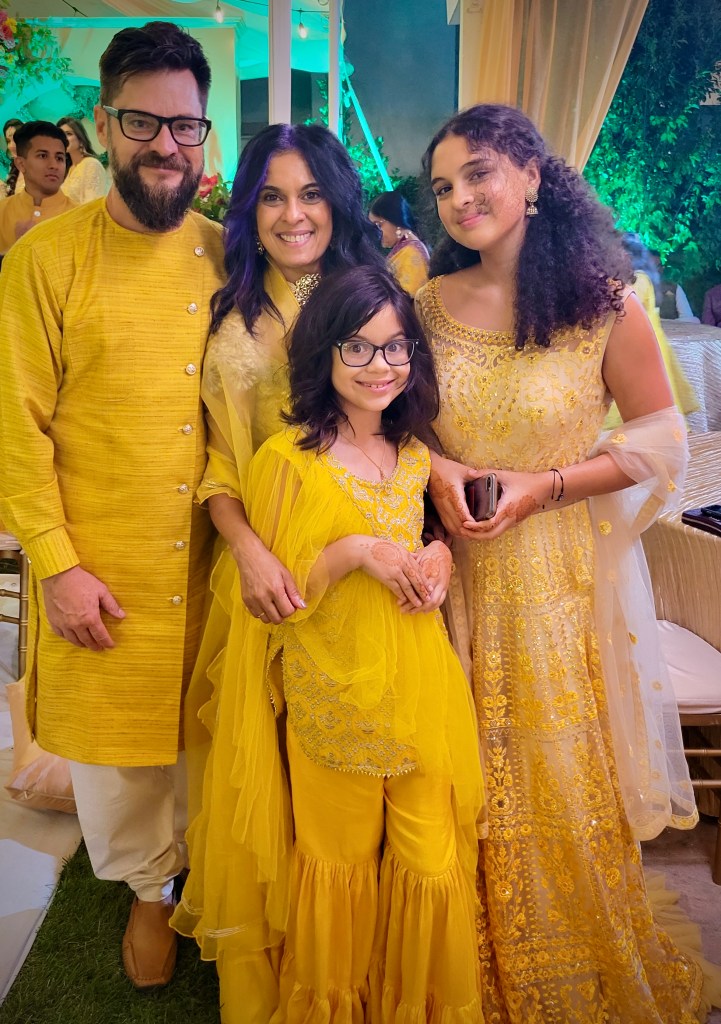
Aamera is raising her two daughters, Laila, 16 a budding film director, and Lina, 11 who attends theater camp, in all the philosophies that have shaped her life, and made her the person she is today.
DISCUSSION : Our goal is to start a dialogue through the stories we present here. Please send us your comments, either by posting a comment at the bottom of this blog, and/or sending an email to ’ashausastories@gmail.com’.
AshaUSA’s mission is to provide culturally specific programs to the South Asian community to foster health and harmony in their lives. Please visit our website ‘ashausa.org’ for more information on our programs, volunteer opportunities and resources.

 VoicesUnderTheBanyanTree.com
Leave a comment